-

Delivering the Future of Power on the Battlefield
As conflicts around the world are on the rise, one doesn’t have to look far to understand that maintaining secure access to energy resources is critical to meet mission success and protect communities being threatened. The conflict in Eastern Europe has again brought a spotlight to these issues and driven global governments and militaries to…
-

Webcast: Project Overmatch
This event happened on January 26, 2023 Artificial intelligence and machine learning (AI/ML) are paving the way for future military activities, and the Navy’s Project Overmatch is exploring how to use them to develop strategies that keep the U.S. ahead of near-peer adversaries such as Russia and China. Vessels utilizing these technologies will evolve to…
-

Q&A: The State of Hypersonics
The potential of hypersonic weapons has military leaders rethinking everything they knew about missiles. A combination of speed — hypersonics can exceed Mach 5, or five times the speed of sound — maneuverability and flexibility means that hypersonics break the old rules of both missile defense and offense. Detecting, identifying and killing a missile that…
-
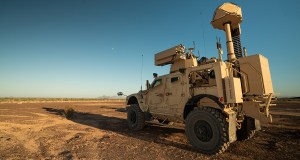
Birds, Planes, Drones – KuRFS Radar Can Spot Them All
KuRFS: It stands for Ku-band Radio Frequency System. And it stands up against enemy drones, along with artillery and other small, fast threats. The advanced, adaptable, multi-mission radar made by Raytheon Missiles & Defense, a Raytheon Technologies business, is the U.S. Army’s ‘go-to’ sensor to find all classes of unmanned aircraft systems, or UAS, commonly…
-
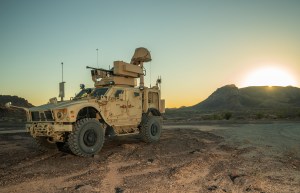
Q&A: The Role of CUAS on the Modern Battlefield
Unmanned aircraft systems (UAS) open up an entirely new world for those looking to perform quick-strike, low-risk attacks on infrastructure, opposing forces or even civilian targets. Due to their size and maneuverability, they are hard to detect and track. They are low cost and the fact that they can be built or modified using commercial…
-
How Hybrid-First Cloud Technology Enables Government Innovation
Hybrid cloud architectures have taken hold in recent years as the US government looks to unify its many different on-premises, custom-built, and cloud applications. However, as federal agencies begin to adopt more cloud technologies, one common challenge has emerged: the need to comply with stringent regulatory standards that govern Secret and Top Secret data. Regulations…
-

Digital Modernization Solutions for Multi-Domain Operations
In the face of unprecedented geopolitical competition and increasingly sophisticated and persistent cyber threats, the Department of Defense (DoD) is undertaking digital modernization to protect national security systems and warfighting platforms. By incorporating commercial technologies into operational systems and platforms, defense leaders can leverage data more effectively and achieve a higher level of sustained force…
-

Webcast: The Air Force’s Strategy to Maintain Air Dominance
This event happened on November 10, 2022 Maintaining air superiority is a critical concern for the U.S. military, which relies on dominating airspace as one component of its “firepower over manpower” tactical strategy. The U.S. Air Force is adopting a “four-plus-one” strategy to meet the goals of its air dominance plan, moving away from its…
-
Webcast: Building the Future Supply Chain
This event happened on October 28, 2022 The U.S. military has long been unparalleled in its ability to move manpower and materiel around the globe. But maintaining that edge is harder than ever, as supply chain disruptions, adversaries looking to degrade or obstruct logistics efforts and the need for ever faster and more flexible response…

Featured: