-
Building a Data-Centric Mission Partner Environment
When the U.S. military withdrew warfighters from Afghanistan, one of the biggest challenges was to maintain data flow across the joint forces while dismantling a 20-year-old traditional infrastructure. To keep information moving, DOD rapidly replaced the legacy IT infrastructure with a cloud-native network. This transformational network did more than simply maintain data flow. The cloud-native…
-
Webcast: Data for Joint Operations
The Defense Department plans to use data to expand the common operational picture, or COP, that informs troops about the state of the battlefield, enemy positions, and other high-value assets. Programs like the Army’s Project Convergence and Project Rainmaker, the Air Force’s Advanced Battle Management System, and the Navy’s Project Overmatch are intended to expand…
-
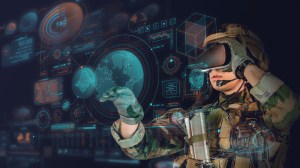
The CAE Perspective on Training the Force of the Future
The global environment is changing. Political upheaval, climate change and the complexity of technological advances increase both the difficulty, and the tempo, of military operations, driving a need for modernization of training. Training systems that are adaptive, resilient, and scalable, provide critical flexibility in efficiently and effectively preparing the armed forces for today’s challenges. Change…
-

SNC Prioritizes IR&D, Develops New AISR Platform, RAPCON-X™
For Sierra Nevada Corporation (SNC), innovation and strategic problem solving never stops. The company is well known for putting its own “skin in the game,” something its private ownership affords flexibility for. SNC now continues its investment in the future of the armed services, this time with a new Aerial Intelligence, Surveillance and Reconnaissance (AISR)…
-

Army-Industry Collaboration is the Key to Modernization
Ricky Freeman, President, Defense & Space, Honeywell Aerospace The ongoing conflict in Eastern Europe shines a light on the U.S. Army’s strategic focus on readiness and modernization. In its most comprehensive transformation in decades, the Army is simultaneously positioning itself to defeat any potential enemy today and to win on the joint all-domain battlefield of…
-

“Switching Cost” – For the Army’s Future Long-Range Assault Aircraft Program, It’s More than Just Money
“Switching cost” is a term businesses use to better understand the affordability and true customer cost of changing, or switching, from one system or product to another. It is easy to identify the cost of the product itself, but the total cost comes in many other forms. For the United States Military, this means operations,…
-
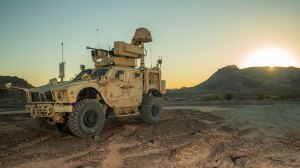
Defeating drones: Demonstration in the desert
Testing of Raytheon Missiles & Defense’s counter-UAS capabilities shows continued success in anticipating and responding to evolving drone threats In the Arizona desert, drones flew across the summer skies, alone and in swarms. They represented what the U.S. Army has identified as a critical problem: the proliferation of unmanned aircraft systems, or UAS, and the…
-
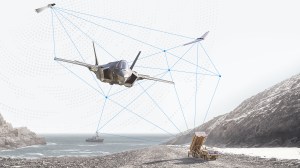
Enabling the 21st Century Warfighter
For generations, customers have counted on Lockheed Martin to help them overcome their most complex national security challenges and stay ahead of emerging threats. The decades ahead will require more technologically-advanced solutions than ever before. To help accelerate American and allied military modernization and preserve global deterrence, Lockheed Martin is developing a new framework for…
-
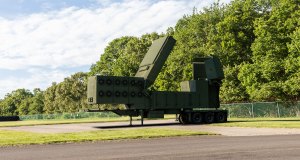
GhostEye: Nothing Goes Unseen
Raytheon unveils its next-gen radars’ new name Raytheon Missiles & Defense, a Raytheon Technologies business, unveils its new name for a family of advanced air and missile defense radars: a series of radars with enhanced sensor performance and reliability—improving defense capability against the proliferation and evolution of the advanced threats of today and tomorrow. A…
-
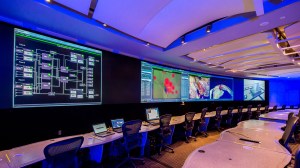
Visualizing the art of the possible
Infusing advanced technologies into modeling and simulation to help customers make better decisions The test was a smashing success — but not at all a surprise. Off the coast of Hawaii, a Standard Missile-3 Block IIA interceptor launched from the guided missile destroyer USS John Finn, rocketed outside Earth’s atmosphere and destroyed an intercontinental ballistic…

Featured: