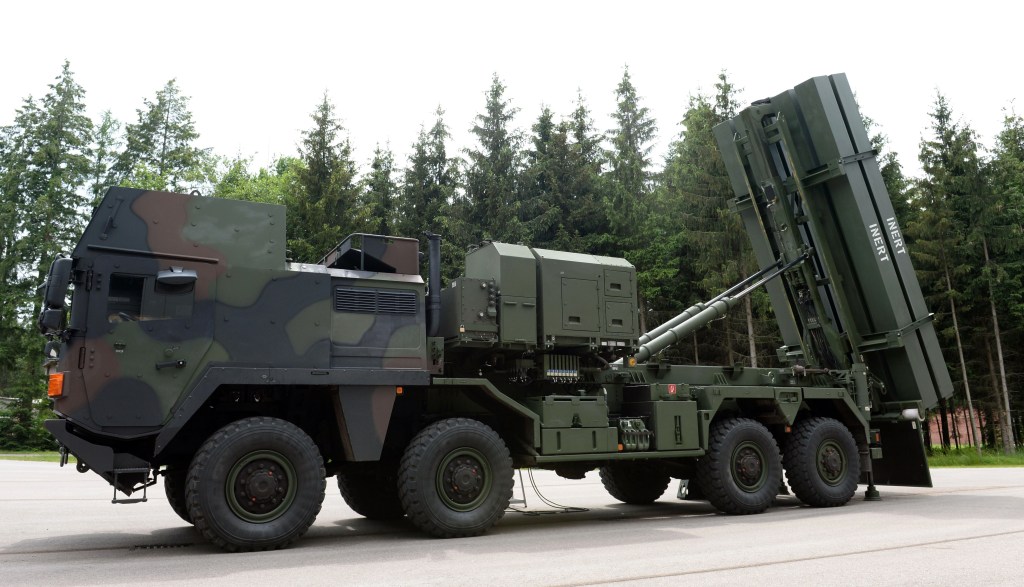
GÖTTINGEN, Germany — Germany will not conclude a contract for the procurement of the air defense system pitched by Lockheed Martin, MBDA Deutschland and Italy’s Leonardo before the September elections, the Ministry of Defence told members of German Bundestag’s Defence Committee on Tuesday.
Originally, the TLVS program to develop the Medium Extended Air Defense System, or MEADS, in Germany, was to be negotiated and signed in the current legislative period. But the proposal from prime contractor MBDA won’t be finalized by the end of June when the parliament’s Budget and Defence committees hold their last sessions.
According to sources with inside information about the situation, even the planned deadline for the new offer in March is unlikely to be met. Also still being negotiated are plans for MBDA and Lockheed Martin to establish a joint venture for the implementation of TLVS/MEADS.
Lockheed Martin said in a statement Tuesday that it is in discussions over the details of its TLVS proposal with the German MoD. “This is a large and complex program of great importance,” the statement reads. “We all agree that a thorough review of the details is appropriate and we continue to receive strong support for our solution and the path we are on to a TLVS contract.”
MBDA declined to comment on the issue.
A few weeks ago, the defense policy spokesman of the Social Democrats in the Bundestag, Rainer Arnold, called for a stronger integration of Lockheed Martin into the process. The U.S. company should “not merely be a supplier among many” but could help with its knowledge and personnel in the area of system integration, Arnold said.
He also demanded that MBDA’s parent company, Airbus, and Lockheed Martin provide further guarantees. According to Arnold, MBDA’s offer was incomplete, as the price tag for Lockheed’s and Diehl’s missile systems was missing.
The defense expert of the opposition Green Party in the Bundestag, Tobias Lindner, criticized on Tuesday the shift of the contract to the next legislature period. If Defence Minister Ursula von der Leyen wants to pass on the sole responsibility of the delay to the industry, he said, it should have been clear that the new framework conditions for contracts — implemented by the minister — would lead to lengthy negotiations.
For Lindner, it is questionable whether the project will actually be executed in the coming legislature.
Jen Judson, Defense News’ land warfare reporter in Washington, contributed to this report.